
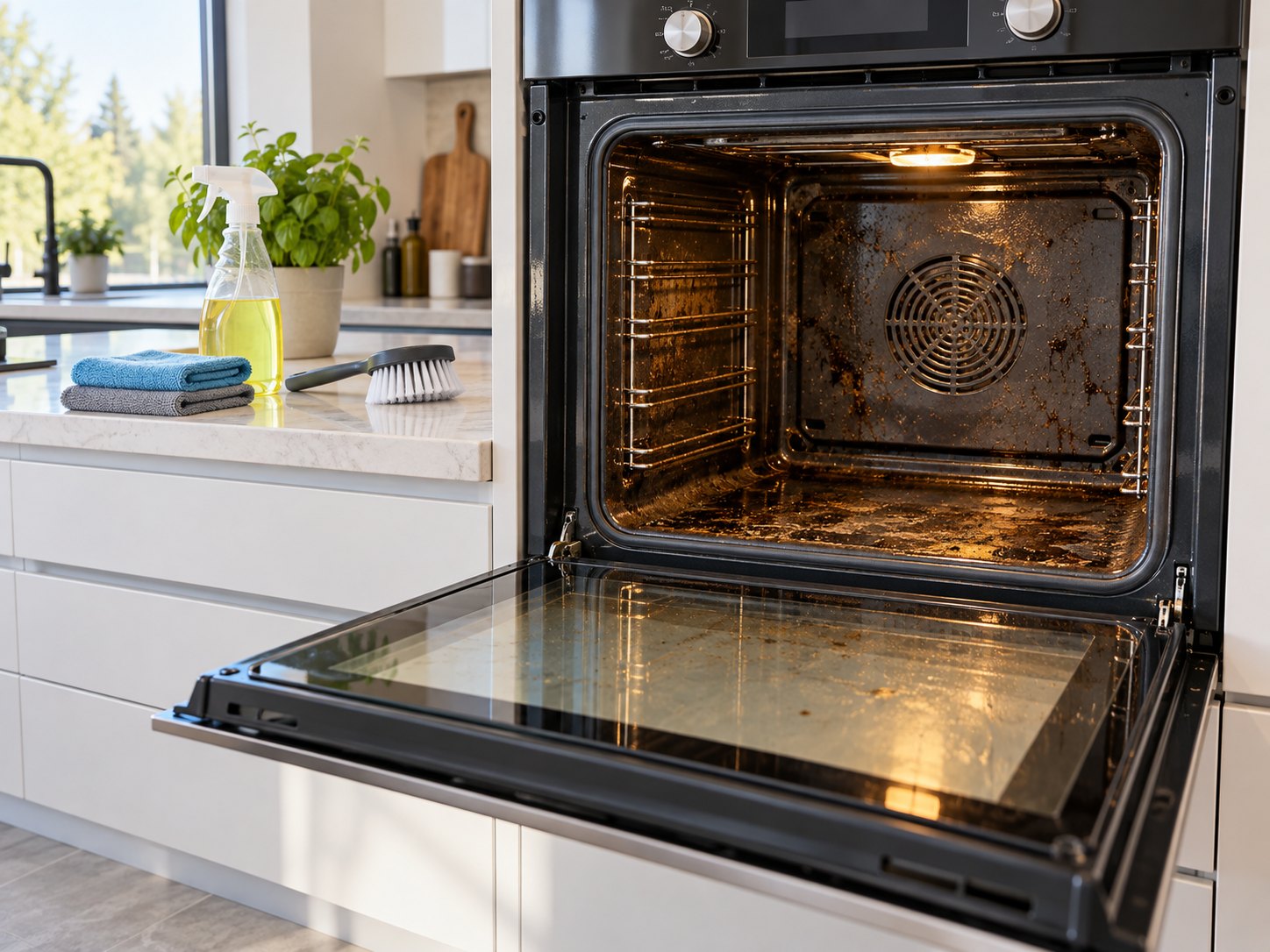
A heavily soiled oven is rarely a problem that can be solved with a quick wipe. Grease, burnt-on splashes and discolouration build up in layers. That is why good oven cleaning is primarily about method rather than force.
What many people get wrong
Common mistakes include aggressive experiments with unsuitable products, mixing different cleaners and allowing too little contact time. This often means a lot of scrubbing with little effect. Seals, coatings and glass elements are particularly sensitive.
A systematic approach
- Prepare the interior: Remove trays and racks and treat them separately.
- Use cleaner selectively: Do not overdose; focus on the soiled areas.
- Allow sufficient contact time: Many residues only loosen when given enough time.
- Work layer by layer: Loosen first, remove next, then finish-clean.
- Do not forget the door and glass: This is where the visual result is especially noticeable.
What to watch out for
Ovens are functional appliances, not rough workshop surfaces. Tools that are too harsh, aggressive abrasives or incompatible chemicals can cause more harm than good over time. A material-friendly approach is therefore worthwhile, especially with newer appliances or coated surfaces.
When professional help is worthwhile
- when dirt has built up over a long period
- when cleaning is required before a property handover
- when the oven has not been thoroughly cleaned for a long time
- when you want to save time and achieve a clean result without risking damage to materials
Oven cleaning is especially useful as an additional service alongside home, deep or Christmas cleaning, because it is one of those tasks that is often postponed in everyday life but makes a very visible difference.